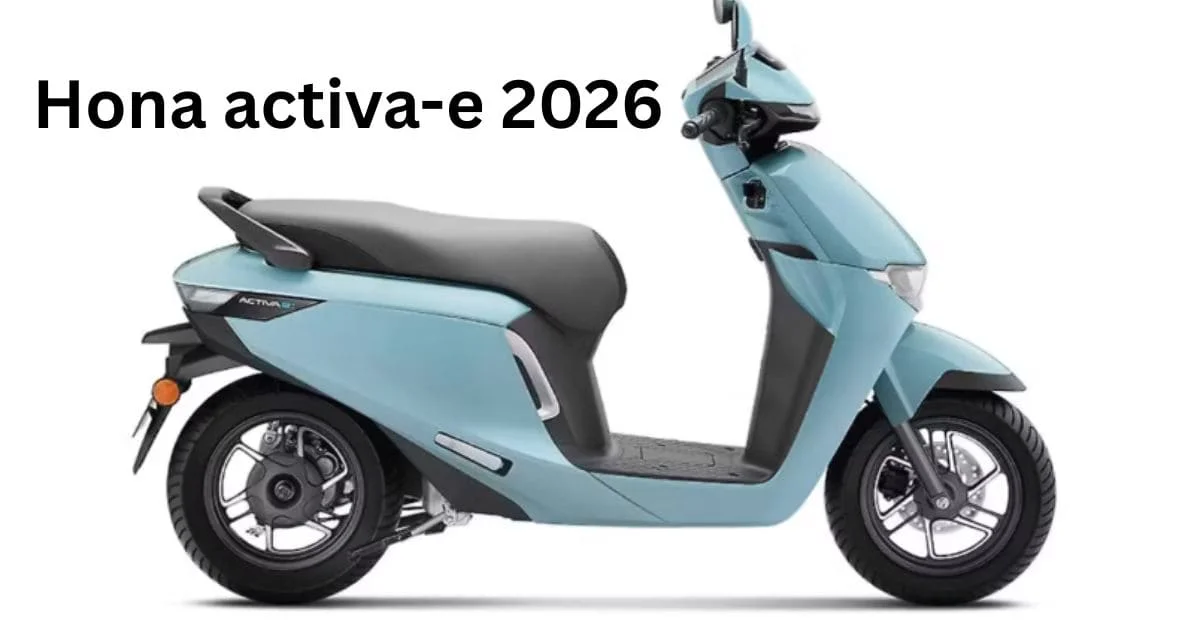
For more than two decades, the word Activa has been deeply stitched into the fabric of Indian families. Whether it’s a college student rushing to class, a father carrying groceries, or a working professional navigating traffic-packed city roads, the Honda Activa has always been that dependable machine sitting quietly in the garage, ready to go anywhere without drama. Now, with fuel prices constantly climbing and electric mobility becoming impossible to ignore, Honda has made its boldest move yet — the launch of the Honda Activa e
This isn’t just another electric scooter trying to grab attention with flashy marketing. This is Honda attempting to electrify one of the most trusted names in Indian automotive history. That alone makes the scooter important. The bigger question, though, is whether this electric version can truly replace the petrol-powered legend people grew up with. Honda is betting heavily on a unique battery-swapping strategy instead of traditional charging, and that changes the entire ownership experience.
The numbers look promising on paper. A 102 km claimed range, a 6 kW electric motor, 80 km/h top speed, connected technology, reverse mode, and removable batteries all sound modern and practical. But real-world city commuting is not just about specifications. It’s about comfort in traffic, reliability during daily use, running costs, and convenience when life gets busy. So, does the new Honda Activa e: genuinely deserve the crown of India’s ultimate urban commuter?
Why the Honda Activa Legacy Matters
How Activa Became India’s Favorite Scooter
Very few vehicles in India have managed to create emotional trust the way the Honda Activa has. The scooter didn’t become successful because it was flashy or powerful. It became a bestseller because it simply worked every single day without demanding attention. Indian buyers value peace of mind more than anything else, and Honda mastered that formula perfectly. The traditional Activa earned a reputation for bulletproof reliability, smooth refinement, low maintenance, and incredible resale value. That combination made it the default recommendation in almost every household discussion about buying a scooter.
The Activa’s dominance also came from its versatility. It was equally comfortable being ridden by a college student, a delivery worker, or a retired family member. Unlike sporty scooters that target specific audiences, the Activa appealed to literally everyone. It became less of a vehicle and more of a trusted household appliance. That’s exactly why Honda’s transition into electric mobility carries massive pressure. If this scooter disappoints buyers, it won’t just hurt sales; it could damage decades of consumer trust.
At the same time, the market around Honda has changed dramatically. Electric scooter brands like Ather Energy and Ola Electric have already captured attention with futuristic features and aggressive pricing. Honda could no longer sit quietly on the sidelines watching competitors shape India’s EV future. The Activa e: is Honda’s answer to that challenge, and it carries the responsibility of defending an empire that has ruled Indian roads for years.
The Pressure of the EV Revolution
Electric scooters are no longer a niche experiment in India. Rising fuel prices, government EV incentives, and growing environmental awareness have rapidly accelerated adoption. City commuters especially are beginning to realize that electric scooters make financial sense for daily use. Running costs are dramatically lower, maintenance is simpler, and instant torque makes riding through traffic surprisingly enjoyable.
But there’s also skepticism surrounding EVs. Many people worry about battery life, charging time, resale value, and long-term reliability. Honda understands this fear better than most manufacturers. Instead of aggressively reinventing the wheel, the company has taken a safer and more familiar approach with the Activa e
This strategy is extremely smart because Indian consumers don’t always chase innovation for the sake of innovation. They want products that simplify life rather than complicate it. Honda’s goal with the Activa e: is clearly not to create the wildest electric scooter in the market. Instead, it wants to build the most practical and approachable EV possible.
Honda Activa e: Design and Road Presence
Familiar Styling with Futuristic Touches
One of the smartest decisions Honda made with the Activa e: was resisting the temptation to create an alien-looking scooter. Some EV manufacturers design scooters that look like they escaped from a science-fiction movie, which can alienate traditional buyers. Honda understood that most Activa customers value familiarity. As a result, the Activa e: retains a recognizable silhouette while adding enough futuristic details to feel modern.
The front apron features sharp LED lighting that instantly differentiates it from petrol-powered siblings. Sleek daytime running lamps on the handlebar give the scooter a premium touch, while diamond-cut alloy wheels add a cleaner, more upscale appearance. Even though the design feels evolutionary rather than revolutionary, it works brilliantly because it balances familiarity with freshness.
The scooter also carries a commanding road presence despite being compact enough for crowded urban streets. Unlike some electric scooters that appear toy-like, the Activa e: maintains a mature and sturdy look. That matters because Indian buyers often associate physical presence with durability and value. Honda clearly designed this scooter to feel reassuring rather than intimidating.
Ergonomics and Rider Comfort
Comfort has always been a defining strength of the Activa lineup, and thankfully Honda hasn’t abandoned that philosophy here. The upright seating position immediately feels natural, especially for riders transitioning from petrol scooters. The lower seat height of 675 mm makes the scooter highly accessible for riders of different heights, including shorter riders who sometimes struggle with larger EV scooters.
The riding posture feels relaxed and commuter-focused rather than sporty. Wide handlebars, comfortable foot placement, and balanced weight distribution make daily city riding feel effortless. In chaotic Indian traffic, comfort matters far more than aggressive styling or track-ready handling. Nobody wants wrist pain or back strain after navigating bumper-to-bumper traffic for an hour.
The suspension setup also appears tuned for comfort instead of sharp cornering. That’s exactly what city commuters need because Indian roads are full of potholes, speed breakers, and unpredictable surfaces. Honda understands that the average Activa rider values smoothness and stability far more than aggressive performance characteristics.
Performance and City Riding Experience
Electric Motor Specifications
The Honda Activa e: is powered by a 6 kW Permanent Magnet Synchronous Motor producing 22 Nm of torque. Those numbers may not sound earth-shattering to performance enthusiasts, but for urban commuting, they are more than sufficient. Electric scooters behave differently from petrol scooters because torque arrives instantly. That instant response makes city riding feel surprisingly lively and effortless.
P=6 kW, τ=22 Nm
Honda claims the scooter can sprint from 0 to 60 km/h in 7.3 seconds, which is genuinely impressive for a commuter-focused scooter. The top speed of 80 km/h is also practical because most Indian city riders rarely exceed those speeds during daily commutes. The performance tuning feels focused on real-world usability rather than headline-grabbing statistics.
What truly changes the experience is the silence. Traditional scooters produce vibrations, engine noise, and gearless transmission sounds. The Activa e:, by contrast, glides almost silently through traffic. That quietness transforms stressful commuting into something noticeably calmer and more refined.
Acceleration and Riding Modes
Honda offers three riding modes on the Activa e: — Econ, Standard, and Sport. These modes dramatically change the scooter’s personality depending on the rider’s priorities. Econ mode prioritizes maximum range and efficiency, making it ideal for relaxed city cruising. Standard mode balances performance and battery consumption for daily commuting, while Sport mode sharpens throttle response for quicker overtakes and more energetic acceleration.
The flexibility of these modes makes the scooter adaptable to different riding situations. Stuck in traffic during peak hours? Econ mode stretches the range efficiently. Need quick acceleration to overtake buses or auto-rickshaws? Sport mode delivers immediate punch. This versatility gives the scooter broader appeal across different rider types.
Interestingly, the Activa e: doesn’t feel intimidating despite its quick acceleration. Some electric scooters deliver aggressive throttle response that can feel jerky for new riders. Honda has tuned the power delivery smoothly and progressively, making the scooter beginner-friendly without feeling dull.
Reverse Mode Convenience
One underrated but genuinely useful feature is the dedicated reverse mode. It sounds like a small gimmick until you actually experience tight Indian parking spaces. Pulling heavy scooters backward manually can be frustrating, especially in cramped apartment basements or office parking lots.
The reverse assist function simplifies this process dramatically. Instead of struggling to drag the scooter out manually, riders can slowly reverse the scooter using electric assistance. It’s one of those features that may not sell the scooter initially but becomes incredibly valuable during daily ownership.
Battery Technology and Honda’s Swapping Strategy
Understanding the Dual Battery Setup
The Activa e: uses two removable 1.5 kWh lithium-ion battery packs placed under the seat. Together, they provide a total capacity of 3 kWh and a claimed range of 102 km.
1.5 kWh+1.5 kWh=3 kWh
Honda’s decision to use removable swappable batteries instead of a fixed charging setup is perhaps the most controversial and fascinating aspect of the scooter. Rather than plugging the scooter into a wall socket for hours, users can swap depleted batteries at Honda e:Swap stations within minutes.
This strategy addresses one of the biggest psychological barriers preventing EV adoption: charging anxiety. People hate waiting. Traditional charging can feel inconvenient, especially for users living in apartments without dedicated charging access. Honda’s swapping system eliminates that downtime almost entirely.
How Honda e:Swap Works
The swapping process is designed to be simple. Riders visit a Honda e:Swap station, open the seat compartment, remove the depleted batteries, and replace them with fully charged units. The entire process reportedly takes under two minutes, which is faster than many petrol refueling experiences.
Honda also offers Battery-as-a-Service subscription plans, allowing buyers to purchase the scooter at a lower upfront cost while paying separately for battery usage. This model reduces concerns about long-term battery degradation because Honda retains responsibility for battery health and maintenance.
From a business perspective, this is extremely clever. in any ev bikes batteries are most important things. By separating battery ownership from scooter ownership, Honda lowers the initial purchase barrier significantly.
Is Battery Swapping Better Than Charging?
The answer depends entirely on your lifestyle and location. Battery swapping is incredibly convenient if swap stations are easily accessible in your city. Riders can essentially enjoy “instant charging” without waiting hours beside a power socket.
However, the entire experience relies heavily on infrastructure density. If your city lacks sufficient swap stations, the system quickly becomes inconvenient. Unlike traditional EVs that can charge almost anywhere with electricity access, the Activa e: depends on Honda’s ecosystem.
This creates a very different ownership model compared to rivals like Ather 450X or Ola S1 Pro, which emphasize home charging convenience. Honda’s system feels futuristic and practical, but only if the infrastructure grows aggressively over the next few years.
Variants and Smart Features
Standard Variant Features
The standard Activa e: variant focuses on delivering essential commuter-friendly features without unnecessary complexity. Buyers get a 5-inch TFT display showing speed, battery level, range information, and trip data. Full LED lighting improves visibility and modernizes the scooter’s appearance, while the USB Type-C charging port ensures smartphones stay powered during commutes.
Safety equipment includes a front disc brake combined with CBS technology, helping riders maintain stability during sudden braking situations. Honda has intentionally kept this variant simple because many traditional Activa buyers prioritize reliability and ease of use over flashy gadgets.
The pricing also makes this version more accessible. Reports suggest ex-showroom pricing starts around ₹1.17 lakh to ₹1.19 lakh depending on region and variant selection.
RoadSync Duo Technology Package
The higher-end RoadSync Duo variant transforms the scooter into a connected technology hub. It receives a massive 7-inch touchscreen TFT display with excellent brightness for outdoor visibility. Through Honda’s RoadSync app integration, riders gain access to turn-by-turn navigation, call controls, music management, live vehicle tracking, and OTA updates.
For younger buyers who treat vehicles as connected devices, these features add significant appeal. The ability to receive navigation instructions directly on the dashboard improves practicality during city rides. OTA updates also ensure the scooter remains technologically current without requiring physical service visits.
Still, Honda wisely avoided overwhelming users with overly complicated systems. The interface appears designed for usability rather than gimmicks, which aligns perfectly with the Activa brand philosophy.
Practical Ownership Experience
Running Costs and Maintenance
Electric scooters shine brightest when it comes to operating costs. Compared to petrol-powered scooters, the Activa e: should cost dramatically less per kilometer to run. Reports estimate running costs at around ₹0.29 per kilometer, making daily commuting significantly cheaper than petrol alternatives.
Maintenance is also expected to be lower because electric scooters contain fewer moving mechanical parts. There’s no engine oil, clutch, gearbox, or exhaust system requiring periodic maintenance. That simplicity could make the scooter extremely attractive for budget-conscious commuters.
Honda’s strong service network also gives the scooter a major advantage. Buyers already trust Honda’s after-sales support infrastructure, which reduces anxiety surrounding EV ownership.
Storage Space Compromise
The biggest practical downside of the Activa e: is the compromised under-seat storage. Because the dual batteries occupy significant space beneath the seat, storage capacity becomes noticeably smaller compared to petrol-powered Activas.
For Indian families who regularly store groceries, helmets, raincoats, and daily essentials inside the scooter, this limitation could feel frustrating. Honda essentially traded storage practicality for battery-swapping convenience.
Dependence on Swap Station Availability
Infrastructure remains the make-or-break factor for the Activa e:. In cities with widespread swap stations, ownership could feel seamless and revolutionary. In locations without sufficient coverage, the experience could become inconvenient quickly.
Some online community discussions have already raised concerns about the current density of Honda’s swap network in certain areas.
That doesn’t mean the system is flawed. It simply means buyers must carefully evaluate their local infrastructure before purchasing. This scooter makes the most sense for riders living in cities where Honda actively supports the swapping ecosystem.
Honda Activa e: vs Rivals
Comparison with Ola, Ather, and Suzuki
The electric scooter market in India has become fiercely competitive. Rivals like Ather 450S, Ola S1 Pro, and Suzuki e-Access each approach the market differently.
| Scooter | Range | Top Speed | Charging Strategy | Key Strength |
|---|---|---|---|---|
| Honda Activa e: | 102 km | 80 km/h | Battery Swapping | Reliability & Convenience |
| Ather 450S | 115 km | 90 km/h | Home Charging | Performance & Tech |
| Ola S1 Pro | 176 km* | 120 km/h | Fast Charging | Long Range |
| Suzuki e-Access | Competitive | Urban Focused | Traditional Charging | Brand Trust |
*Claimed range figures vary by riding conditions.
Honda’s biggest weapon isn’t necessarily superior specifications. It’s trust. Millions of Indian families already trust Honda products blindly, and that emotional connection carries enormous value.
At the same time, younger buyers seeking maximum technology and performance may still prefer more aggressive EV brands. The Activa e: targets mainstream commuters rather than thrill-seekers.
Pricing, Value, and Buying Decision
Ex-Showroom Pricing Breakdown
The Activa e: starts around ₹1.17 lakh for the standard variant and reaches approximately ₹1.52 lakh for the RoadSync Duo version.
That pricing positions the scooter directly against premium electric rivals. It isn’t cheap, but Honda appears confident buyers will pay extra for reliability, service quality, and brand trust.
The Battery-as-a-Service subscription model also helps reduce the financial burden. Buyers can avoid worrying about battery replacement costs years down the line, which is a major psychological advantage.
Who Should Buy the Honda Activa e 😕
The Activa e: makes the most sense for urban commuters who prioritize convenience, reliability, and low running costs over outright performance. It’s ideal for office commuters, family riders, and traditional scooter users transitioning into the EV world for the first time.
However, buyers should absolutely verify swap station availability before committing. The scooter’s practicality depends heavily on infrastructure support.
If Honda aggressively expands the e:Swap network, the Activa e: could become one of the most practical urban electric scooters in India. If infrastructure growth slows, competitors with home-charging convenience may feel easier to live with long term.
Conclusion
The Honda Activa e: represents far more than just another EV launch. It symbolizes one of India’s most trusted automotive brands stepping confidently into the future of mobility. Honda understood that electrifying the Activa required more than simply replacing an engine with a battery. It required preserving the trust, familiarity, and practicality that made the original scooter legendary.
The result is an electric scooter that feels approachable rather than experimental. It delivers quick city performance, excellent comfort, refined technology, and an innovative battery-swapping system that could genuinely redefine urban commuting if infrastructure expands properly.
The scooter isn’t perfect. Storage compromises and swap-network dependency remain real concerns. But despite those drawbacks, Honda has created something extremely important — an EV that feels normal, practical, and trustworthy for everyday Indian families.
If the original Activa was the king of petrol commuting, the Activa e: might just become the bridge that carries millions of Indian riders into the electric future.
FAQs
1. What is the real-world range of the Honda Activa e 😕
Honda claims a certified range of 102 km, though real-world range will depend on riding style, traffic conditions, and riding mode usage. Most urban commuters can realistically expect around 80–100 km per swap cycle.
2. Can the Honda Activa e: batteries be charged at home?
The primary system focuses on battery swapping through Honda e:Swap stations. Some reports suggest Honda may introduce home charging solutions later, but the main strategy currently revolves around swapping infrastructure.
3. Is the Honda Activa e: faster than petrol scooters?
Yes, especially in city conditions. Electric torque delivery makes acceleration feel immediate and responsive. The scooter can reach 60 km/h in approximately 7.3 seconds.
4. Which variant of the Activa e: is better?
The standard variant is ideal for commuters wanting simplicity and affordability, while the RoadSync Duo variant suits tech enthusiasts who value navigation, smartphone connectivity, and connected features.
5. Is the Honda Activa e: worth buying in 2026?
It depends on your city’s swap-station network and your commuting needs. If Honda’s infrastructure is strong in your area, the scooter offers excellent practicality, low running costs, and trusted reliability.